Our Solution
Our Solution

DeltaNova
By Business Case

Version Control & Collaboration

Data Consistency & Management

AI & Automation
By Industry

Aviation

Manufacturing

Legal

Financial Services

Life Sciences
Our Solution
DeltaNova
By Business Case
Version Control & Collaboration
Data Consistency & Management
AI & Automation
By Industry
Aviation
Manufacturing
Legal
Financial Services
Life Sciences

Last updated: 15 April 2026
The enterprise knowledge agenda is at an inflection point. For years, organisations have invested heavily in knowledge management systems, content platforms, governance frameworks, and taxonomies. Yet despite this infrastructure, most enterprises remain structurally misaligned under change.
In regulated and knowledge-intensive industries, the Chief Knowledge Officer now faces a defining mandate: Knowledge must now include intelligence about change and deliver trust in content and data.
Knowledge that does not adapt, align, and embed under change will decay into irrelevance and loss of trust.
Enterprises today are saturated with documentation, such as policies and standards, regulatory interpretations, transformation playbooks, process documentation, and internal guidance.
In many regulated organisations, documentation estates have grown through years of programme activity, regulatory response, and digital transformation. The result is duplication, divergence, and drift. Multiple policies say the same thing differently. Legacy guidance remains accessible alongside updated standards. Regional variations emerge without central reconciliation. Employees are left to interpret what is current and authoritative.
This is not a knowledge gap. It is a trust gap.
Research consistently shows that transformation initiatives fail not because of strategic weakness, but because execution and adoption falter. When the knowledge environment is fragmented, adoption becomes discretionary. In regulated industries, discretion introduces risk.
The concept of a “single source of truth” is often framed as an information architecture problem. It is not - it is a behavioural and change problem.
A source of truth only functions if recognised as authoritative, is current and reconciled, is operationally embedded and drives consistent behaviour
Without those conditions, repositories become archives rather than instruments of governance. Regulators increasingly expect firms to maintain policies and to demonstrate operational embedding and accountability. The presence of documentation is no longer sufficient. Adoption must be provable. Therefore, the CKO’s mandate therefore extends beyond stewardship of content; it includes information coherence across the enterprise.
Most change in large organisations is not centrally orchestrated. It emerges over time through programme activity, regulatory updates, AI pilots, restructuring, mergers, and local optimisation. This leads to policy drift, conflicting interpretations, redundant documentation, competing narratives, and informal workarounds.
Without a mechanism to surface and diagnose these dynamics, fragmentation becomes normalised. Change Intelligence introduces that mechanism, and it enables organisations to:
This is not communications, it is enterprise knowledge diagnostics, which is becoming essential in environments characterised by regulatory scrutiny, AI acceleration, and continuous operating model evolution.
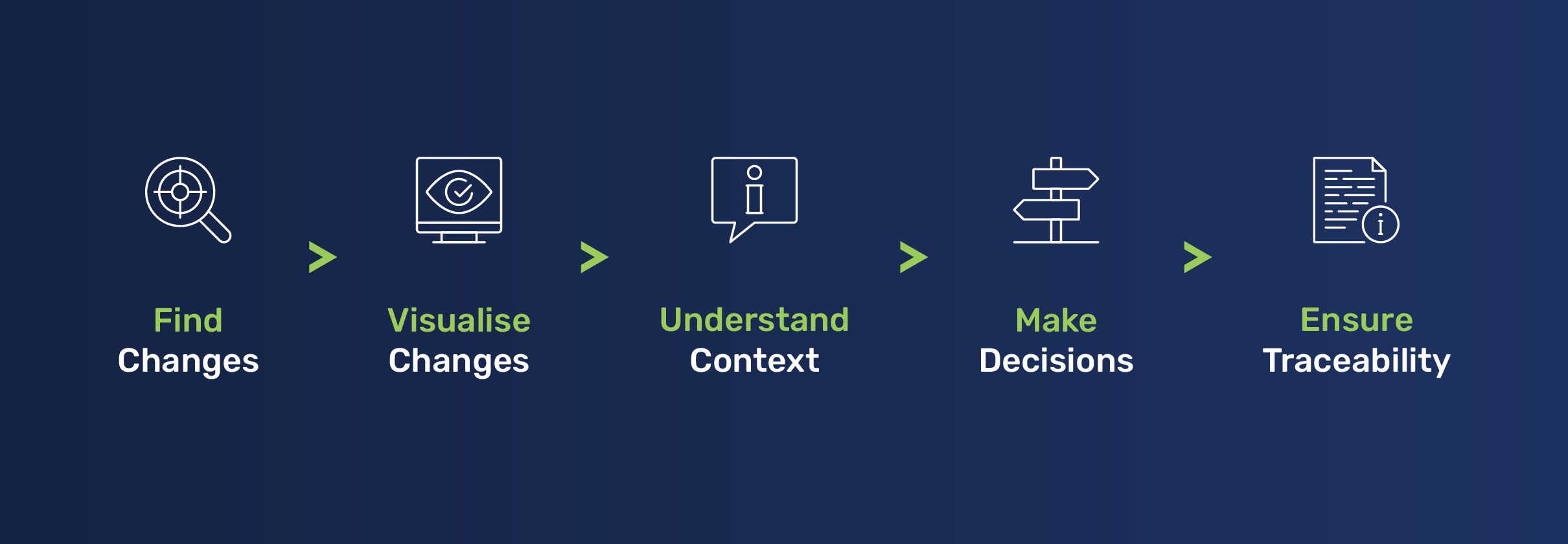
In regulated sectors, documentation estates are often sprawling and layered. Merging documentation is frequently misunderstood as administrative clean-up. It involves:
This is strategically significant because duplication does not simply create inefficiency, it undermines confidence.
When employees encounter multiple versions of guidance, they default to interpretation. Over time, organisational truth becomes negotiable. ISO 30401 reframes knowledge management as a system that must enable effective decision-making and organisational capability, not merely document retention.
Merging and rationalising documentation is therefore not optional refinement. It is foundational to capability.
The acceleration of generative AI makes this issue more urgent. Large language models do not solve fragmentation. They amplify it.
An LLM trained or grounded on duplicated, contradictory, or outdated content will scale confusion at machine speed. Conversely, an LLM grounded in rationalised, confirmed sources of truth can scale clarity. Content de-duplication is therefore not simply operational hygiene, but a prerequisite for responsible AI deployment, enabling clean population, stronger grounding and traceability, reliable policy interrogation, and enterprise search that reflects authoritative knowledge.
Gartner has emphasised that generative AI initiatives require disciplined information governance to mitigate risk and ensure reliability. The CKO’s domain now intersects directly with enterprise AI strategy. Without a robust knowledge foundation, AI maturity is performative rather than real.
This is the strategic shift. Knowledge must now include intelligence about change. That means understanding where knowledge is diverging, where duplication erodes trust, where governance is unclear, and where transformation outpaces documentation.
Change Intelligence connects knowledge integrity with behavioural embedding. It transforms documentation into operational capability. It turns policy into practice. It converts information into alignment. Without this layer, knowledge becomes static. And static knowledge in a dynamic enterprise becomes stale.
As organisations confront regulatory pressure, AI adoption, and constant transformation, they require a strategic capability that bridges knowledge integrity and enterprise change.
DeltaXignia operates as that Change Intelligence Layer. As a strategic capability provider, it enables organisations to:
The objective is not simply better knowledge management. It is sustained transformation, and operational readiness.
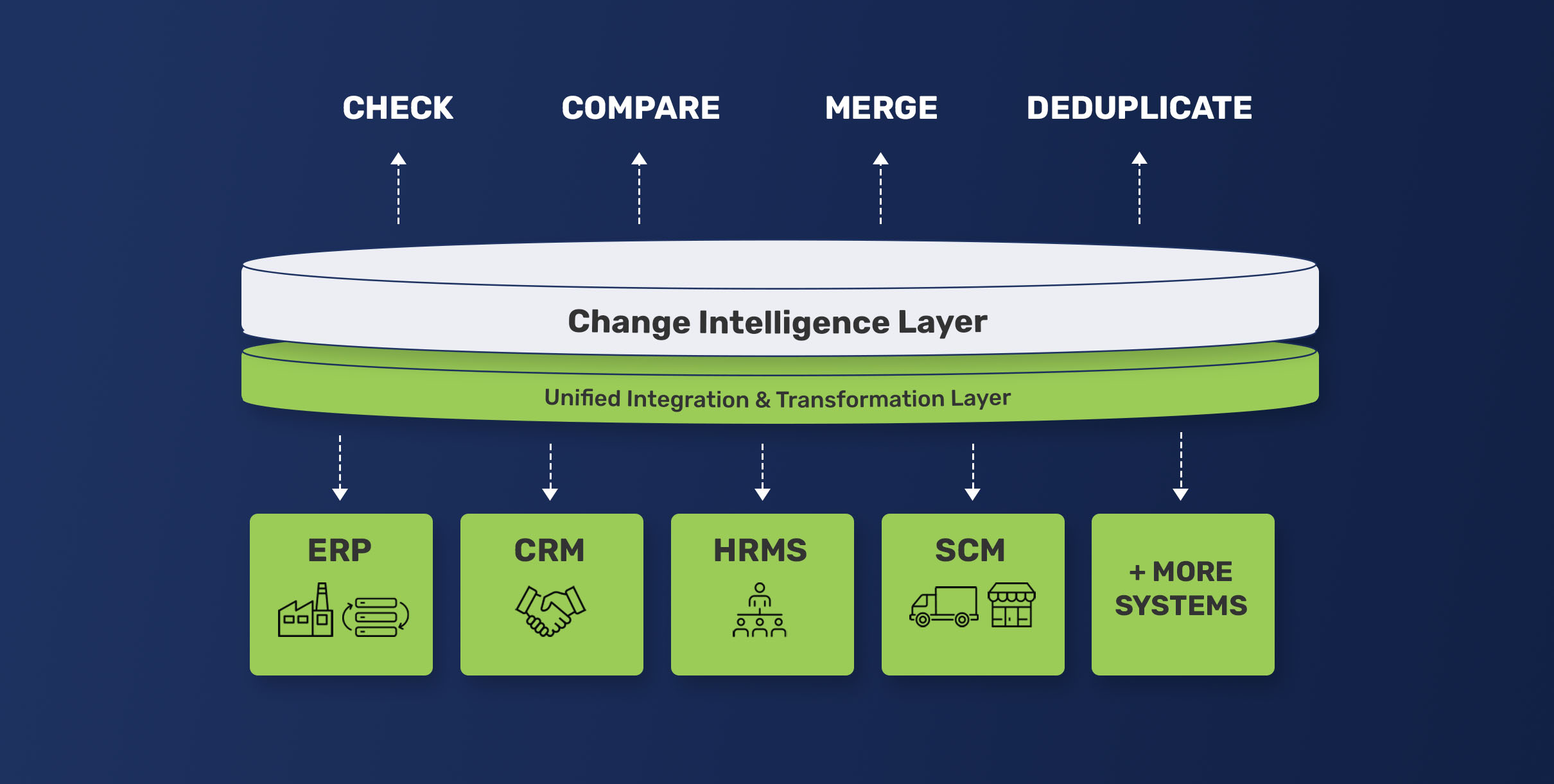
The Chief Knowledge Officer now sits at the intersection of knowledge, risk, and transformation. In the coming decade, competitive advantage will not be determined by information abundance, but by the clarity of truth, the speed of alignment, the integrity of governance, confidence in AI-enabled knowledge, and the ability to embed change into daily operations.
Knowledge that does not evolve with the organisation degrades. It drifts from practice. It loses authority. It becomes archived rather than applied. Without a robust Change Intelligence layer, even the most carefully governed knowledge could become stale.
In regulated industries, staleness is not inefficiency, it’s exposure.
For CKOs, the challenge is no longer content scarcity but fragmentation, drift, and misalignment across an evolving enterprise. Without clear visibility into how change is emerging and impacting the knowledge estate, even well-governed frameworks risk losing authority, trust, and operational relevance.
Get in touch to explore how a Change Intelligence layer can help you surface, analyse, and reconcile change across your knowledge ecosystem, enabling a single coherent source of truth, reducing risk, and supporting confident, scalable transformation across your enterprise.
From ISO Quality Services Ltd.


